- 3 W 51st Street, New York, NY 10019
- (212) 582-5454

What Should You Look for in an Outdoor Event Space in Midtown Manhattan for Large Events?

Why Are Clients Choosing a Rooftop Events Space in Manhattan for Luxury Gatherings?
May 20, 2026
What to Look for in a Rooftop Events Space in NYC Before You Book Your Date
June 2, 2026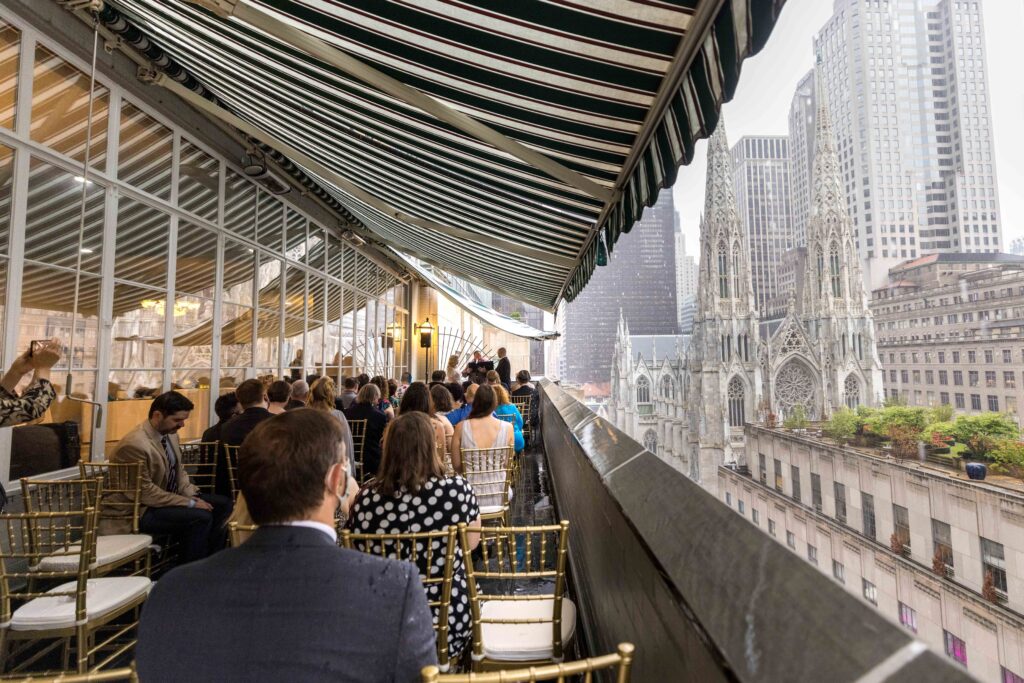
Planning a large event in New York City carries a specific kind of pressure. The city raises expectations, guests arrive with high standards, and the wrong venue can unravel months of careful planning before the first hour of the event is over. When you’re searching for an outdoor event space in Midtown Manhattan for a large group, the stakes are even higher because the location is one of the most competitive event markets in the world, and the options are genuinely overwhelming. This guide cuts through the noise and gives you the specific criteria that actually determine whether a large event will succeed or struggle.
Capacity That Actually Works for Large Groups
The first number any venue will give you is a maximum headcount. That number is important, but it tells you far less than the second question: how does the space function at that number?
A room that lists 350 guests as its maximum cocktail capacity may seat only 180 comfortably for a formal dinner. A terrace that holds 100 for a standing reception may only accommodate 60 with proper circulation space for a catered event with waitstaff moving through the room. Understanding the difference between the maximum and the functional capacity for your specific event format is one of the most important conversations you can have with a venue before signing anything.
For large events, the layout matters as much as the capacity. A space needs a clear flow between a welcome cocktail area, a main dining or presentation area, and a networking or lounge space for afterward. Large events that feel cramped at 150 guests typically suffer from layout problems, not capacity problems. A skilled venue team can walk you through floor plan options and explain how the space functions at different configurations before you commit.
Location That Works for Every Guest, Not Just Those Nearby
Midtown Manhattan is one of the most accessible locations in the entire metro area. Guests from Brooklyn, Queens, the Bronx, Long Island, New Jersey, and Connecticut can reach Midtown by subway, commuter rail, car service, or taxi without significant difficulty. That accessibility matters enormously for large events where the guest list spans multiple boroughs and surrounding areas.
Proximity to landmarks also plays a role that goes beyond aesthetics. When guests can orient themselves quickly and recognize the neighborhood, the pre-event stress that comes from navigating an unfamiliar location drops significantly. For out-of-town guests in particular, a Midtown address near recognizable landmarks like Rockefeller Center, Radio City Music Hall, and Fifth Avenue provides an instant point of reference.
For large corporate events with international attendees, Midtown’s proximity to major hotels and transportation infrastructure makes coordination far simpler. Guests staying within a few blocks don’t need private transfers, shuttle arrangements, or complicated logistics. They walk.
Indoor-Outdoor Versatility Is Non-Negotiable for Large Events
Outdoor access is a genuine asset for large events. It gives guests space to breathe, creates natural zones within the event flow, and adds visual and atmospheric variety across a long evening. But outdoor access without a reliable indoor contingency is a risk that no large event planner should take.
For a gathering of 100 or more guests, a sudden weather change that forces everyone inside with no prepared indoor space is a crisis. A gradual temperature drop over an evening that chills an unheated terrace is a slow erosion of the event’s energy. The best outdoor event venues in Midtown Manhattan solve this by maintaining a seamless connection between outdoor terrace access and fully prepared indoor spaces, so the transition feels like a natural movement rather than a disruption.
Floor-to-ceiling windows in the indoor spaces are particularly valuable here. They preserve the feeling of openness and the connection to the city’s skyline even when guests move inside, so the visual character of the event doesn’t collapse the moment the outdoor component ends.
Large events also benefit from having multiple distinct spaces within the same venue. Breakout rooms, a lounge area separate from the main dining room, and a smaller space for VIP guests or speakers all add flexibility that single-room venues cannot offer.
In-House Catering Capacity for Large Guest Counts
The catering equation at large events is more complex than it first appears. It’s not just about having enough food. It’s about the pace of service, the management of dietary requirements across a large and varied guest list, the quality of presentation at scale, and the coordination between the kitchen and the service staff in real time.
External catering teams working in an unfamiliar kitchen with venue staff they haven’t worked with before introduce friction at every one of those points. In-house catering teams working in their own kitchen, with their own service staff, eliminate that friction almost entirely. The logistics that cause catering delays and service inconsistencies at large events are almost always coordination problems rather than food quality problems.
For a large corporate event, in-house catering also means the culinary team can adapt in real time. If a presentation runs long and dinner needs to be held, the kitchen adjusts. If a dietary requirement wasn’t submitted in advance, the team handles it without disruption. That responsiveness is difficult to achieve when the catering arrives from outside the building.
Audio-Visual and Technical Infrastructure
Large events typically involve some form of audio-visual requirement, whether it’s amplified music, a keynote presentation, a video tribute, or background sound across multiple spaces simultaneously. These needs require infrastructure that goes beyond a portable speaker and a projector screen.
Ask specifically about built-in sound systems, projection capabilities, screen placement options, and whether the venue has dedicated technical support on-site during the event. A technical issue at a 200-person corporate gala or a large private celebration causes visible disruption, and having a specialist in the building rather than a number to call off-site is a meaningful operational difference.
Reliable high-speed Wi-Fi for hybrid corporate events is a separate consideration worth confirming explicitly. Many venues offer Wi-Fi coverage in their main event spaces but have dead zones in breakout rooms, terraces, or lobby areas. For large events with hybrid or digital components, a venue-wide coverage test before the event is always worth requesting.
On-Site Accommodation for Guests Traveling from Out of Town
Large events almost always include guests who have traveled specifically to attend. For a corporate conference, that might be an entire delegation from another city. For a large private celebration, it might be family members and close friends arriving from across the country or abroad. In both cases, on-site accommodation transforms the event logistics from complex to manageable.
When guests stay in the same building as the event, the evening doesn’t need to end on a schedule dictated by the last train or the closing of the car service window. People linger, conversations continue, and the event delivers its full value rather than being cut short by logistics. For multi-day events, on-site rooms allow the experience to carry through from one day to the next without the energy of the group dissipating overnight.
Guest room blocks also simplify the host’s planning significantly. Confirming room availability alongside event space booking, rather than managing separate reservations across multiple nearby hotels, reduces administrative complexity and gives the host more control over the overall guest experience.
3 West Club: The Complete Answer for Large Events in Midtown Manhattan
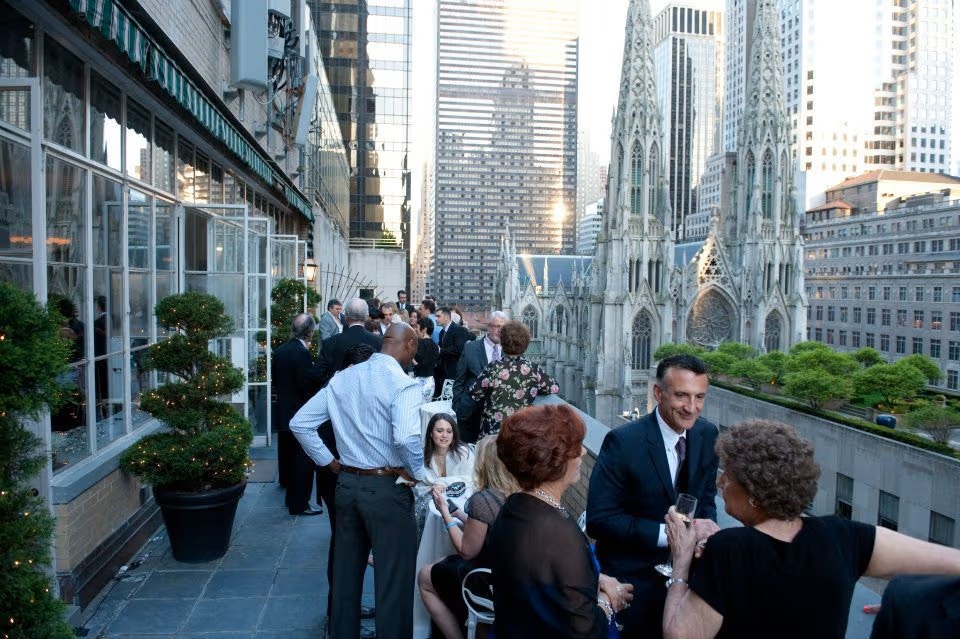
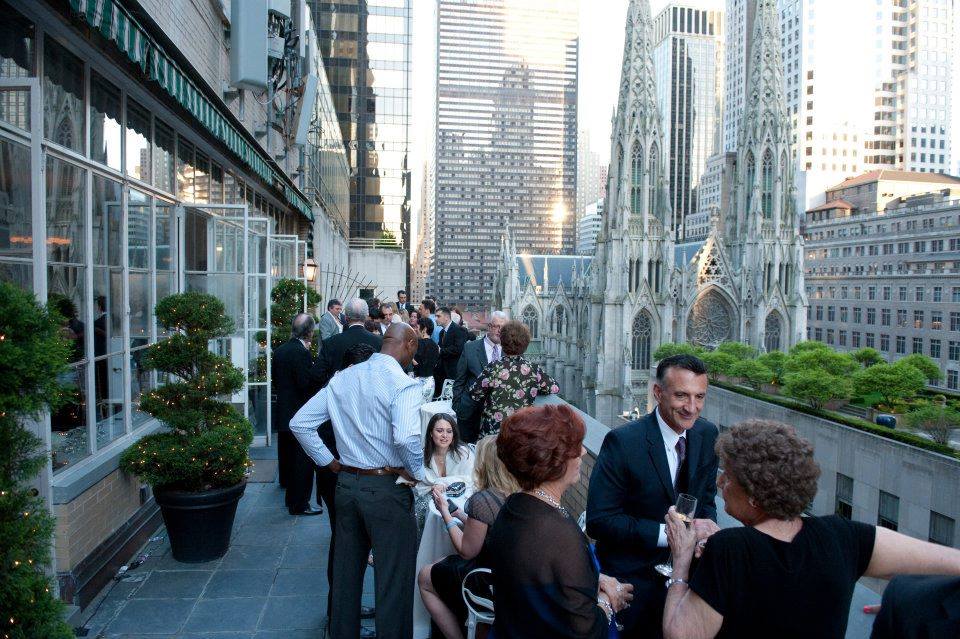
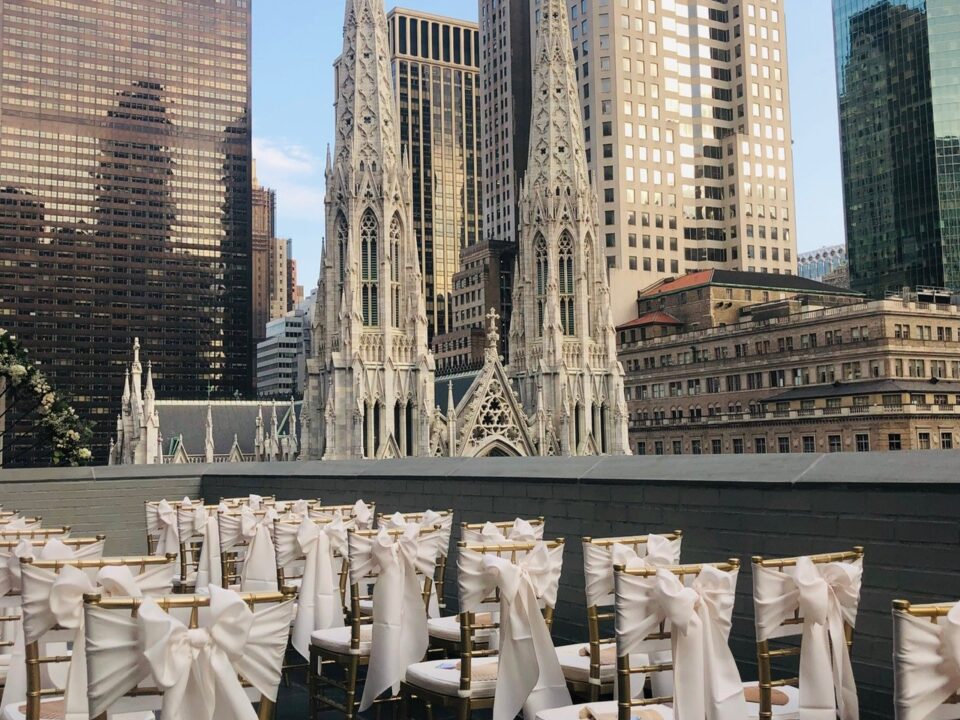
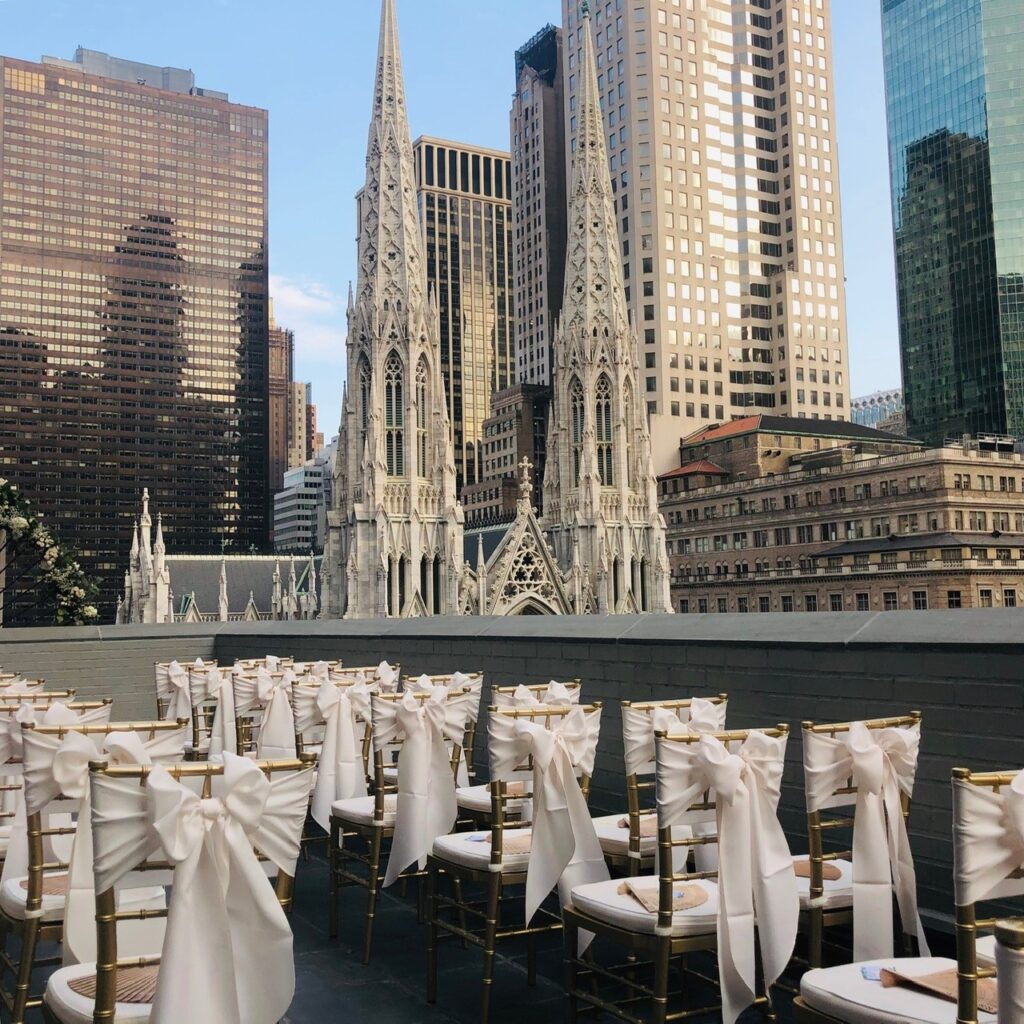
3 West Club at 3 West 51st Street delivers on every criterion that matters for large events in Midtown. The venue’s six event spaces accommodate groups from 20 to 350 guests, with the Grand Ballroom handling up to 350 at a cocktail reception and 180 for a formal banquet, and the Solarium offering a private terrace with floor-to-ceiling windows overlooking St. Patrick’s Cathedral for cocktail receptions of up to 130 guests.
For large corporate events, the venue offers theater, classroom, and banquet configurations across its rooms, supported by a dedicated event planning team that manages every logistics detail from floor plan design to day-of coordination. The hotel conference room options serve everything from executive board meetings to full-day leadership retreats, and the in-house culinary team handles catering for events of any size with the quality and pace that large gatherings require.
The 28 boutique hotel rooms on-site keep out-of-town guests within the venue experience, and the Midtown location puts every guest within steps of the city’s most recognizable landmarks. Browse the photo gallery to see the spaces across a range of event formats, then contact the team to begin planning your large event with a venue that genuinely handles the scale.
Conclusion
Finding the right outdoor event space in Midtown Manhattan for a large event means evaluating far more than square footage and maximum capacity. Layout flexibility, indoor-outdoor connectivity, in-house catering, technical infrastructure, location accessibility, and on-site accommodation all determine whether a large event lands the way it was planned. When a venue delivers on every one of those fronts, the host can focus on the people in the room rather than the logistics surrounding them.
FAQs
What capacity should I look for in an outdoor event space in Midtown Manhattan for a large event?
For large events, look for venues that comfortably accommodate your guest count in the specific format you need, whether that’s a seated dinner, standing reception, or theater-style presentation, rather than just meeting the maximum listed capacity. A venue that lists 300 as its maximum cocktail capacity may only seat 150 for a formal dinner. Always ask for the functional capacity across different event configurations before making a decision.
How do I evaluate whether a venue’s layout will work for 200 or more guests?
Request a floor plan and ask the venue team to walk you through how the space is typically configured for events at your scale. Look for clear circulation paths, separate zones for cocktail reception and dining, and flexibility to adapt the layout if your guest count changes. A venue with multiple connected rooms or breakout spaces gives you far more control over the guest experience on a large scale.
What questions should I ask about catering before booking a large event venue in NYC?
Ask whether catering is handled in-house or through external vendors. For in-house catering, ask about menu customization, how dietary requirements are managed at scale, the service model for large events (buffet versus plated service), and how the kitchen handles timing adjustments if the event runs ahead or behind schedule. For venues using external caterers, ask about the coordination process between the catering team and venue staff.
Do outdoor event spaces in Midtown Manhattan offer hotel accommodations on-site?
Some do, and it’s worth prioritizing this feature for large events with out-of-town guests. On-site accommodations allow the event to run without a hard cutoff driven by guest transportation logistics, and they simplify planning significantly by keeping accommodation and event venue booking in the same conversation. Ask about guest room blocks and how far in advance they need to be reserved.
How far in advance should large events in Midtown Manhattan be booked?
For large events at popular Midtown Manhattan venues, booking six to twelve months in advance is strongly recommended. Peak dates in spring (April through June) and fall (September through November) fill earliest, particularly for Saturday evenings. If your event date is flexible, asking the venue about shoulder-season availability can open up more options and allow for greater flexibility throughout the planning process.
Reserve Your Hotel Conference Room Rental Today!
To Start Planning Your Event

Jonah Wilson, MBA, is the Marketing and Events Manager at 3 West Club, a historic Manhattan venue known for its timeless “Old New York” elegance and premier event experiences. With expertise spanning hospitality, entertainment, fintech, and consumer goods, Jonah specializes in developing strategic marketing campaigns that drive brand growth, elevate guest experiences, and increase engagement. His passion for innovation, analytics, and consumer insights helps position 3 West Club as a leading destination for weddings, corporate events, and overnight stays in the heart of New York City.