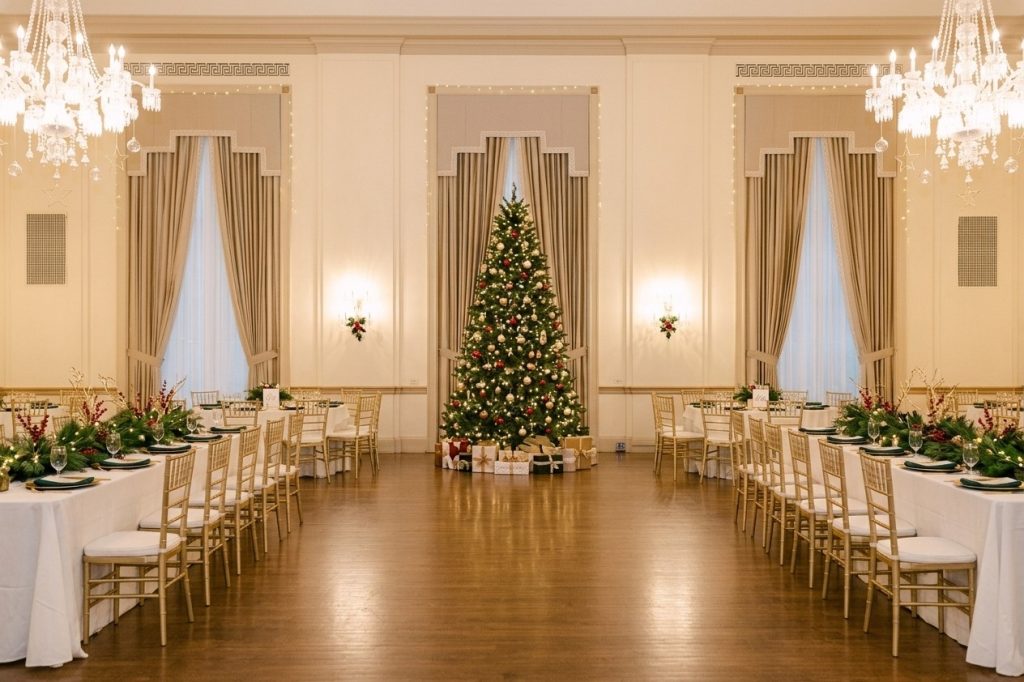
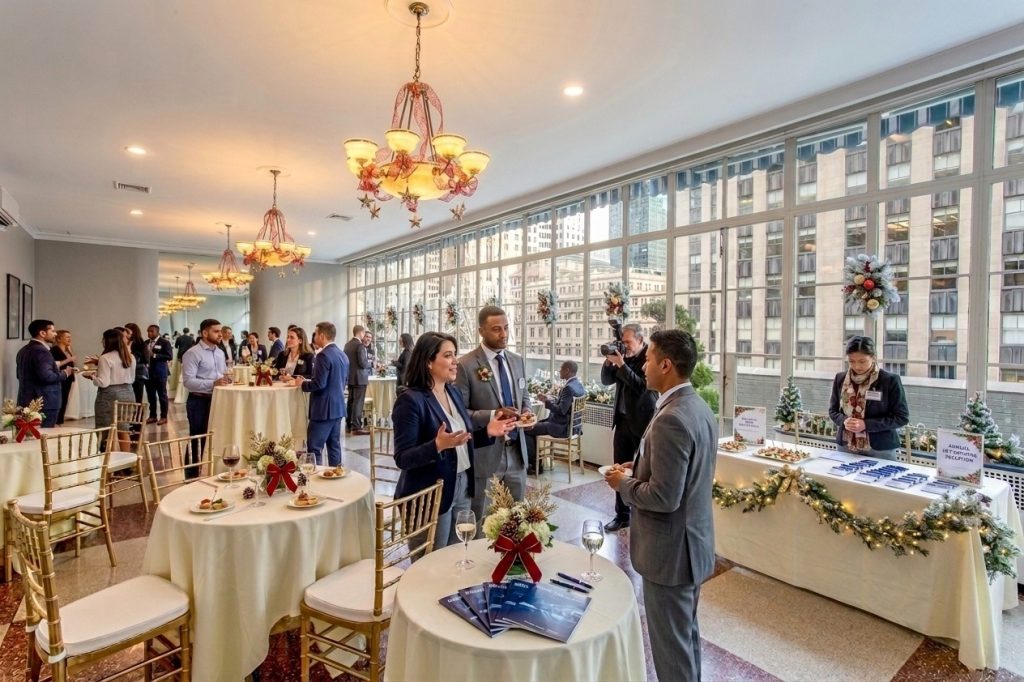
- 3 W 51st Street, New York, NY 10019
- (212) 582-5454

How to Choose an Office Holiday Party Venue NYC Your Team Will Love

Private Event Venue NYC: How to Choose the Right Space for Any Occasion
September 6, 2026
Cocktail Party Venue Manhattan with Rooftop Bars and City Views
September 16, 2026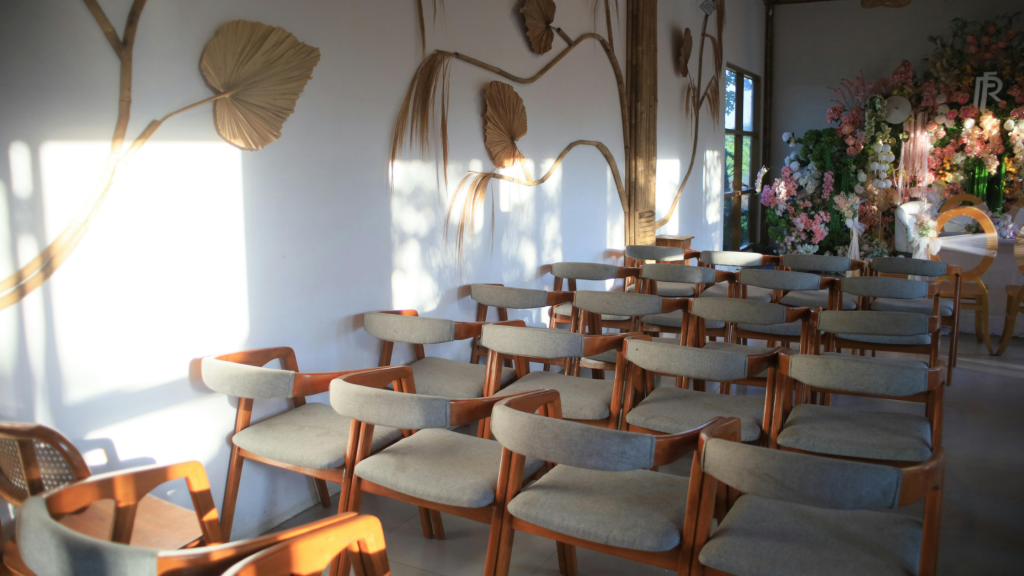
Every HR manager and office coordinator knows the challenge. Pleasing an entire team with different tastes, different comfort levels, and different expectations on a single December evening is not easy. Picking the wrong office holiday party venue NYC leads to a night that feels obligatory rather than fun, and everyone quietly leaves early.
This guide lays out a practical framework for choosing an office holiday party venue NYC employees will actually enjoy and talk about the next morning, covering everything from atmosphere and layout to catering, budget, and timing.
None of this requires an unlimited budget or a professional event planner on staff. It mostly requires asking the right questions early, before a venue is booked, rather than hoping everything works out once the invitations already went out.
Think About Your Team’s Vibe First
A formal seated dinner suits some teams perfectly and falls completely flat with others. A looser cocktail-style mixer works well for teams that value flexibility and mingling but can feel aimless for a group that prefers structure. There is no universally correct answer, which is exactly why this decision deserves real thought rather than defaulting to whatever was booked last year.
Consider team size, company culture, and honest feedback from previous holiday parties before locking in a format. A quick, informal poll of a few team members across departments often surfaces useful information that a planner would never guess on their own. Comparing Midtown holiday party venue options with this feedback in hand makes the shortlist far more useful than starting from a blank search.
It also helps to think about how the team behaves at other company events throughout the year. A team that always lingers after a happy hour probably wants a longer, looser format for the holiday party, while a team that tends to head home right after a work dinner might prefer a shorter, more structured evening that respects everyone’s time.
Location That Works for the Whole Company
A central Midtown location reduces travel time for staff coming from multiple offices or commuting from different boroughs. Easy transit access matters even more once alcohol and later hours are part of the evening, since staff need a simple, safe way to get home afterward.
Venues tucked away from major subway lines create friction that quietly suppresses attendance, even when no one says so directly. Comparing corporate event venue options in NYC on accessibility alone, before even looking at room photos, tends to produce a shortlist that works logistically for the whole company rather than just the people closest to the venue.
For companies with hybrid or remote staff who do not commute into an office every day, a central, well-known Manhattan location also removes any confusion about where exactly to go. An address near a major landmark is easier to find and easier to share in a calendar invite than a lesser known spot tucked down a side street.
Room Layouts That Encourage Mingling
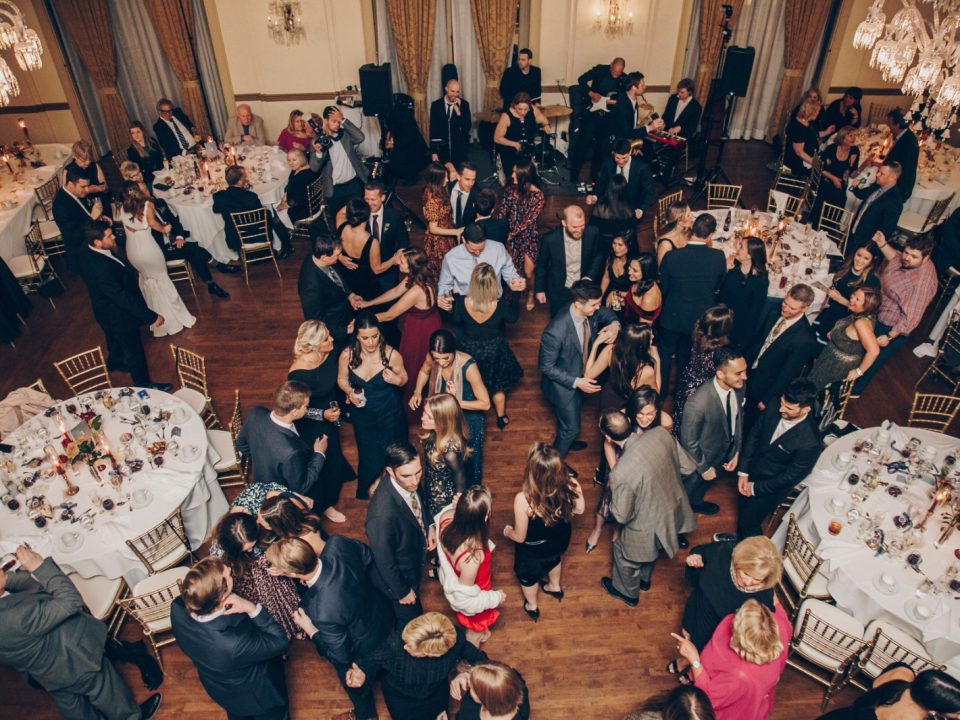
Open floor plans work well for encouraging cross-department mixing, which is often one of the unspoken goals of a company holiday party in the first place. Employees who rarely interact during a normal workweek get a natural reason to talk when the layout invites movement instead of confining everyone to assigned seats.
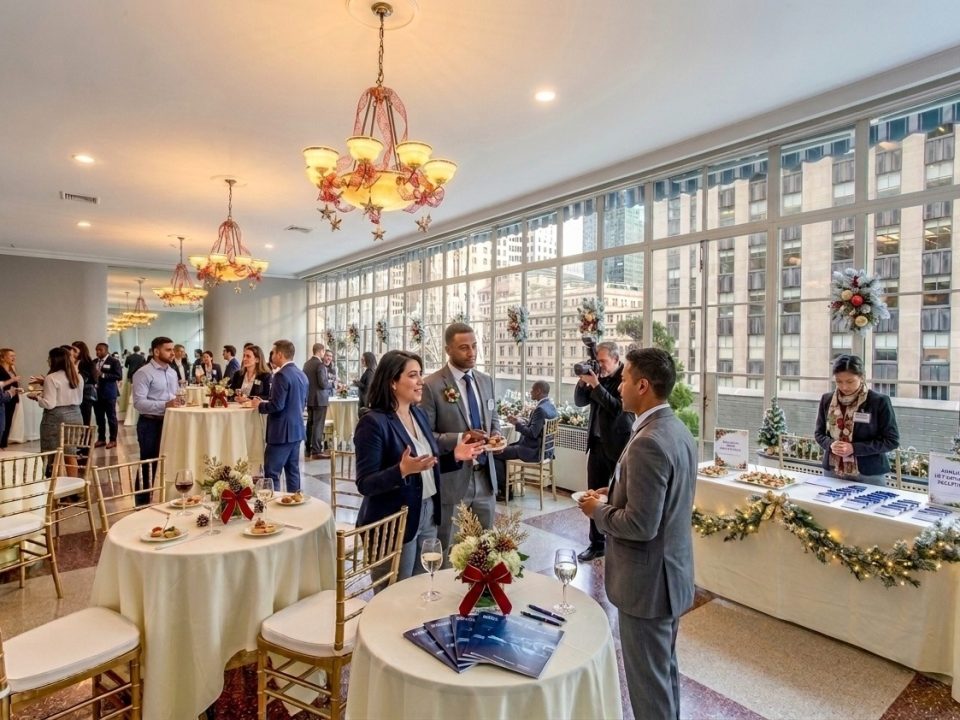
At the same time, separate quieter areas give more introverted staff a comfortable option without feeling forced to participate in a loud, crowded main room the entire night. Exploring corporate dinner spaces in Manhattan with both dynamics in mind helps identify rooms that genuinely support a mix of personalities rather than favoring only the most outgoing employees.
A room with a natural focal point, whether that is a bar, a fireplace, or a view, also tends to organize mingling more naturally than an empty open floor. People gravitate toward a point of interest, which creates small, comfortable clusters of conversation instead of one enormous undifferentiated crowd.
Catering That Handles Every Dietary Need
A modern office holiday party has to account for vegetarian, vegan, gluten free, and allergy conscious staff without turning the menu into an afterthought or a separate, lesser option set off to the side. In-house catering teams that build this into the menu from the start, rather than bolting it on after the fact, tend to produce a noticeably better experience for everyone at the table.
In-house catering also avoids the coordination headache of managing outside vendors during the busiest month of the year for event planning citywide. Previewing the in-house restaurant menu ahead of time, rather than trusting a generic catering package description, gives a much clearer picture of what guests will actually be served.
Collecting dietary information from staff a few weeks ahead of the event, rather than the day before, gives the kitchen enough lead time to prepare thoughtful options instead of a last-minute substitution. A short, anonymous form sent out with the invitation is usually enough to gather what the catering team needs.
Bar Service Without the Liability Headache
Alcohol at a company event always carries some liability concern, and professional in-house bar staff trained to manage service responsibly take a real weight off an HR team’s shoulders. Trained bartenders know how to pace service and handle situations that an outside, unfamiliar vendor might miss.
Custom cocktail menus built around the season can still feel festive and generous without stretching the budget the way an open, unmanaged bar tends to. Exploring a venue’s full range of event spaces alongside its bar program gives planners a complete picture before committing to a package.
Some companies also choose to offer a limited drink ticket system rather than a fully open bar, which gives staff a generous but bounded amount of drinks without the unpredictability of an unlimited tab. A well-run in-house bar team can usually accommodate this kind of structure without any extra complication.
Budget Planning Without Cutting the Fun
Ask for tiered packages that clearly separate room rental, catering, and bar minimums instead of one bundled number that makes it hard to see where the money actually goes. Transparent pricing also makes it easier to trim costs in one area, like scaling back decor, without sacrificing food or drink quality.
Comparing per-person pricing across a few venues before locking in a date is worth the extra hour of research it takes. Reviewing corporate event planning options with a clear budget range in mind from the start keeps the search focused and avoids falling for a venue that looks great but stretches the department budget too thin.
If the budget is genuinely tight, it is usually better to trim the guest list slightly or shorten the event by an hour than to cut corners on food and drink quality. Employees tend to remember a shorter, well-executed party far more fondly than a longer event where the catering felt like an afterthought.
Booking Early to Lock in the Best Date
December weekdays and weekends both fill quickly across Midtown, and the best rooms at the best venues are often gone well before Thanksgiving. Starting the search in September or early October gives a real shot at the preferred date instead of whatever is left over.
Early booking also creates more room to negotiate catering upgrades or added extras, since venues have more flexibility further out from the date. Reaching out early through the venue’s contact page to check availability is a simple step that pays off later in the process.
Booking early also gives HR more time to send the invitation out well in advance, which tends to improve attendance overall. A holiday party announced with only two weeks notice competes with every other commitment already on employees’ calendars for that time of year.
Making the Party Feel Personal to Your Team
A generic holiday party can feel interchangeable with any other company’s event happening in the room next door. Small, specific touches change that impression quickly. A short slideshow of team photos from throughout the year, a lighthearted awards segment recognizing individual contributions, or a playlist built from songs the team actually requested all signal that the event was built around this specific group rather than pulled from a standard template.
Involving a few employees in the planning process, even in a small way like choosing between two menu options or picking the evening’s theme color, also tends to increase enthusiasm across the wider team. People are naturally more invested in an event they had some hand in shaping, even a minor one, than in something that simply appeared on their calendar with no input.
Timing the program of the evening matters as well. Front-loading any formal moments, such as a leadership toast or a company update, earlier in the night keeps that portion from feeling like it interrupts the fun once people have settled into conversation and drinks. Saving the more relaxed, purely social portion of the evening for later allows the party to build energy naturally rather than peaking too early and fading by the time dinner service wraps up.
What a Strong Events Team Adds to the Night
The difference between a smoothly run holiday party and a chaotic one often comes down to staff who have handled this exact type of event many times before, rather than a room and a caterer assembled for the first time around this specific date. An experienced events team anticipates problems before they happen, from adjusting bar staffing during a predictable post-toast rush to quietly resolving a seating mix-up before guests even notice.
This kind of experience also shows up in how the night is paced. Course timing, music transitions, and even when the lighting shifts from bright and casual to warmer and more intimate all benefit from a team that has run dozens of similar events and knows what keeps a room’s energy moving rather than letting it stall.
Handling a Mixed Group of Remote and In-Office Staff
Many companies now manage a genuine mix of fully remote, hybrid, and in-office employees, and a holiday party can either bridge that divide or unintentionally highlight it. Choosing a venue with an easy to reach, well-known location gives remote staff coming into the city for the occasion a straightforward trip, rather than an intimidating one, which noticeably improves the odds they actually attend.
Building in a bit of extra structure early in the evening, such as assigned or suggested seating for the first course before the format loosens into open mingling, also helps remote employees who may not know many coworkers in person yet. It gives them a natural, low-pressure way into conversations rather than leaving them to navigate an unfamiliar crowd entirely on their own.
Recording a short highlight reel or a handful of photos from the event, with clear permission from attendees, also gives remote staff who could not make the trip a way to feel included after the fact, which matters more for long-term team culture than many planners initially expect.
Following Up After the Party
A well-run holiday party does not end the moment guests leave the venue. A brief thank you note or photo recap sent out within a few days keeps the good feeling going and gives employees who could not attend a sense of what the celebration was like. It also gives HR a natural, low-pressure opportunity to gather quick feedback for next year’s planning.
Asking a few informal questions, such as what people enjoyed most or what they would change, costs almost nothing to collect but consistently produces the kind of specific, honest feedback that shapes a noticeably better event the following December.
Balancing Tradition With Something New
Long-tenured employees often have real affection for holiday party traditions the company has built up over the years, whether that is a particular game, a signature drink, or a specific moment like a year-end awards segment. Carrying a few of these traditions into a new venue, even one very different from past locations, helps returning staff feel like the celebration is still recognizably their company’s party rather than something entirely unfamiliar.
At the same time, a new venue is a natural opportunity to introduce one or two fresh elements without overhauling the entire format. A new cocktail, a different style of entertainment, or simply a more striking room than in past years gives the event a sense of progression rather than feeling like the same party held in a new location purely by coincidence.
Striking this balance well tends to produce the strongest reaction from staff, since it respects what people already enjoy about the tradition while still giving them a genuine reason to look forward to something different this time around.
Gathering quick input on which traditions matter most, whether through a short informal conversation with a few longtime staff or a quick poll sent out to the wider team, is usually enough to identify what is worth preserving without turning the decision into a lengthy committee process.
Even a single carried-over tradition, paired with a genuinely new setting like a Midtown venue the company has never used before, tends to strike the right balance between familiarity and freshness for most teams heading into another December celebration and worth keeping in mind while finalizing the run of show.
Conclusion
The best office holiday party venue NYC teams remember months later is the one that genuinely matches company culture, location, and food to what the team actually wants, rather than a generic ballroom booked out of convenience. Taking the time to think through vibe, layout, catering, and timing turns an obligatory night out into something employees look forward to every year.
Brand Mention
3 West Club is a Midtown Manhattan event venue with flexible room layouts, in-house catering and bar service, and easy access for teams coming from across the city. The venue regularly hosts corporate holiday celebrations of varying sizes and works directly with planning teams to build a night around company culture rather than a generic template. Reach out to request a corporate holiday party proposal and start planning an event the whole team will actually enjoy.
FAQs
What size teams can 3 West Club accommodate for an office holiday party?
The venue’s multiple event spaces can flex from small teams to large, company-wide celebrations depending on the room selected.
Can the venue handle dietary restrictions for a large staff?
Yes, in-house catering can build menus that cover vegetarian, vegan, and allergy needs without treating them as an afterthought.
Is bar service included or does it need to be arranged separately?
Bar service is handled in-house, so there is no need to bring in an outside vendor for drinks.
How far ahead should an office holiday party be booked?
Booking several weeks to a couple of months in advance is recommended, since December dates fill quickly across Midtown.
Does the venue offer different package tiers for different budgets?
Yes, packages can be broken down by room rental, catering, and bar minimums to fit different department budgets.
Reserve Your Hotel Conference Room Rental Today!
To Start Planning Your Event

Jonah Wilson, MBA, is the Marketing and Events Manager at 3 West Club, a historic Manhattan venue known for its timeless “Old New York” elegance and premier event experiences. With expertise spanning hospitality, entertainment, fintech, and consumer goods, Jonah specializes in developing strategic marketing campaigns that drive brand growth, elevate guest experiences, and increase engagement. His passion for innovation, analytics, and consumer insights helps position 3 West Club as a leading destination for weddings, corporate events, and overnight stays in the heart of New York City.